

Introduction
In the rapidly evolving landscape of global industry, the demand for precision has transitioned from a competitive advantage to an absolute necessity. As automation, aerospace, and semiconductor technologies advance, the components that drive these systems must meet increasingly stringent tolerances. Tay Chian, a leader in precision manufacturing, stands at the forefront of this industrial revolution, combining decades of craftsmanship with cutting-edge technology to deliver solutions that power the world’s most sophisticated machinery.
The Foundation of Precision
Precision engineering is more than just a measurement; it is a philosophy that governs every stage of the manufacturing lifecycle. At Tay Chian, our journey begins with a deep understanding of the physical properties of materials and the mechanical requirements of the final application. Whether it is a high-speed rotational component for a robotic arm or a heat-resistant housing for industrial sensors, the integrity of the part determines the success of the entire system.
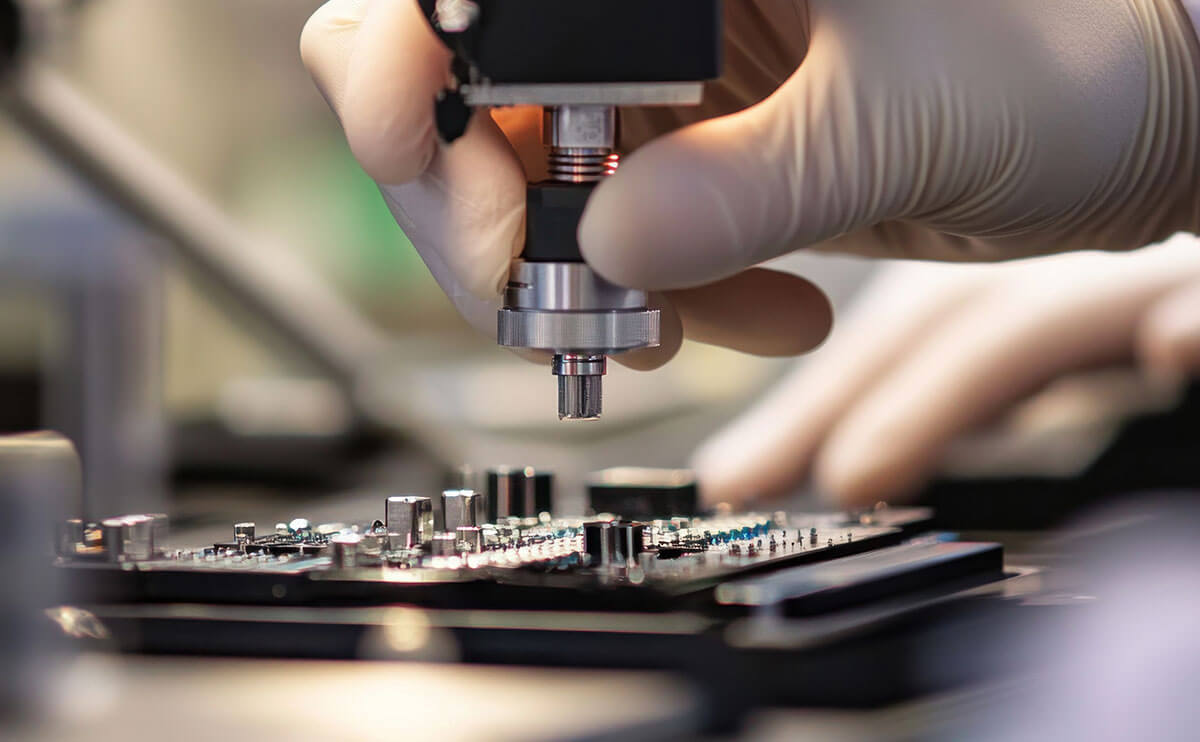
Our production facility utilizes state-of-the-art CNC machining centers, Swiss-type lathes, and multi-axis milling machines. These tools allow us to achieve micron-level accuracy, ensuring that every batch of products is identical to the technical drawing. However, technology alone is not enough. The “Tay Chian Touch” lies in our engineers’ ability to optimize tool paths and cycle times, reducing thermal deformation and mechanical stress during the cutting process.
Material Innovation and Material Integrity
A significant portion of our expertise involves working with a diverse range of materials, including aerospace-grade aluminum, stainless steel, titanium, and high-performance plastics. Each material presents unique challenges. For instance, machining titanium requires specialized cooling techniques and tool coatings to prevent work hardening, while aluminum demands high-speed spindles to achieve a mirror-like surface finish.
By maintaining a robust supply chain of certified raw materials, we ensure that the internal structure of our components is free from defects. This focus on material integrity is vital for industries such as medical device manufacturing and telecommunications, where a single material failure can lead to catastrophic downtime.
The Power of Customization (OEM/ODM Services)
In the modern B2B market, “off-the-shelf” solutions are rarely sufficient. Every client has unique spatial constraints, load requirements, and environmental variables. Tay Chian excels in providing comprehensive OEM (Original Equipment Manufacturing) and ODM (Original Design Manufacturing) services.
Our collaborative process starts with the Design for Manufacturing (DFM) phase. We work closely with our clients’ R&D teams to refine their blueprints, suggesting modifications that improve structural integrity while reducing manufacturing costs. This partnership approach transforms Tay Chian from a mere vendor into a strategic technical partner. We don’t just “make parts”; we help our clients realize their engineering visions.
Quality Assurance: The Zero-Defect Mission
Trust in the industrial sector is built on consistency. Our Quality Assurance (QA) department operates as an independent entity within our organization, equipped with Coordinate Measuring Machines (CMM), optical comparators, and digital roughness testers. Every component undergoes rigorous inspection protocols, including dimensional verification, hardness testing, and surface integrity analysis.
We adhere to international quality management systems (ISO standards), ensuring that our documentation and traceability are transparent. For our global partners, this means peace of mind. When a shipment from Tay Chian arrives at their facility, they know it has passed through multiple layers of validation before being cleared for dispatch.
Sustainable and Smart Manufacturing
As we look toward the future, sustainability has become a core pillar of our operations. Modern manufacturing is often criticized for its environmental footprint, but at Tay Chian, we are implementing “Green Production” initiatives. By utilizing high-efficiency filtration systems for our cutting fluids and recycling metal chips, we minimize waste and reduce our environmental impact.
Furthermore, we are integrating IoT (Internet of Things) sensors into our production lines to create a “Smart Factory” environment. Real-time data monitoring allows us to predict tool wear before it happens, preventing defects and optimizing energy consumption. This digital transformation ensures that Tay Chian remains agile and competitive in a digital-first global economy.
Conclusion: A Legacy of Reliability
The name Tay Chian is synonymous with stability and excellence. As industries continue to push the boundaries of what is possible, we remain committed to providing the “Precision Core” that makes these breakthroughs possible. From the smallest micro-component to complex industrial assemblies, our dedication to quality remains unwavering.
We invite global innovators, engineers, and procurement specialists to explore the possibilities of precision with us. Together, we can build a future that is more accurate, more efficient, and more reliable.